

Why the Goal You Chose Is Not Actually Yours
You achieved it. You expected to feel something real. Instead it felt like you crossed someone else's finish line. There is a reason for that, and it goes deeper than choosing the wrong goal.
You finished something you worked hard for. And instead of the feeling you expected, there was a quieter, more unsettling question underneath the flatness: was this even mine?
Most people never ask that question out loud. It feels ungrateful. It feels like a sign something is wrong with them rather than with the goal. So they file the feeling away, move to the next milestone, and wait to feel it there instead.
Why don't I stay happy after achieving a goal? Why is it never enough, when I know it would have felt like enough while I was still chasing it? Why do my goals feel hollow and meaningless the moment I reach them?
These are not questions about ambition or gratitude. They are questions about a mechanism most people have never been shown. The goal did not fail you. The process that selected it did.
Before you keep reading, here is what this article covers:
Why the brain selects goals based on what the pattern needs, not what you need
Why achieving something you genuinely worked for can still feel like the wrong destination
What the Identity Engine is and how it has been choosing your targets without your awareness
Why the optimism bias makes every new goal feel like it will be the one that finally lands
What changes when you understand which pattern is running your choices
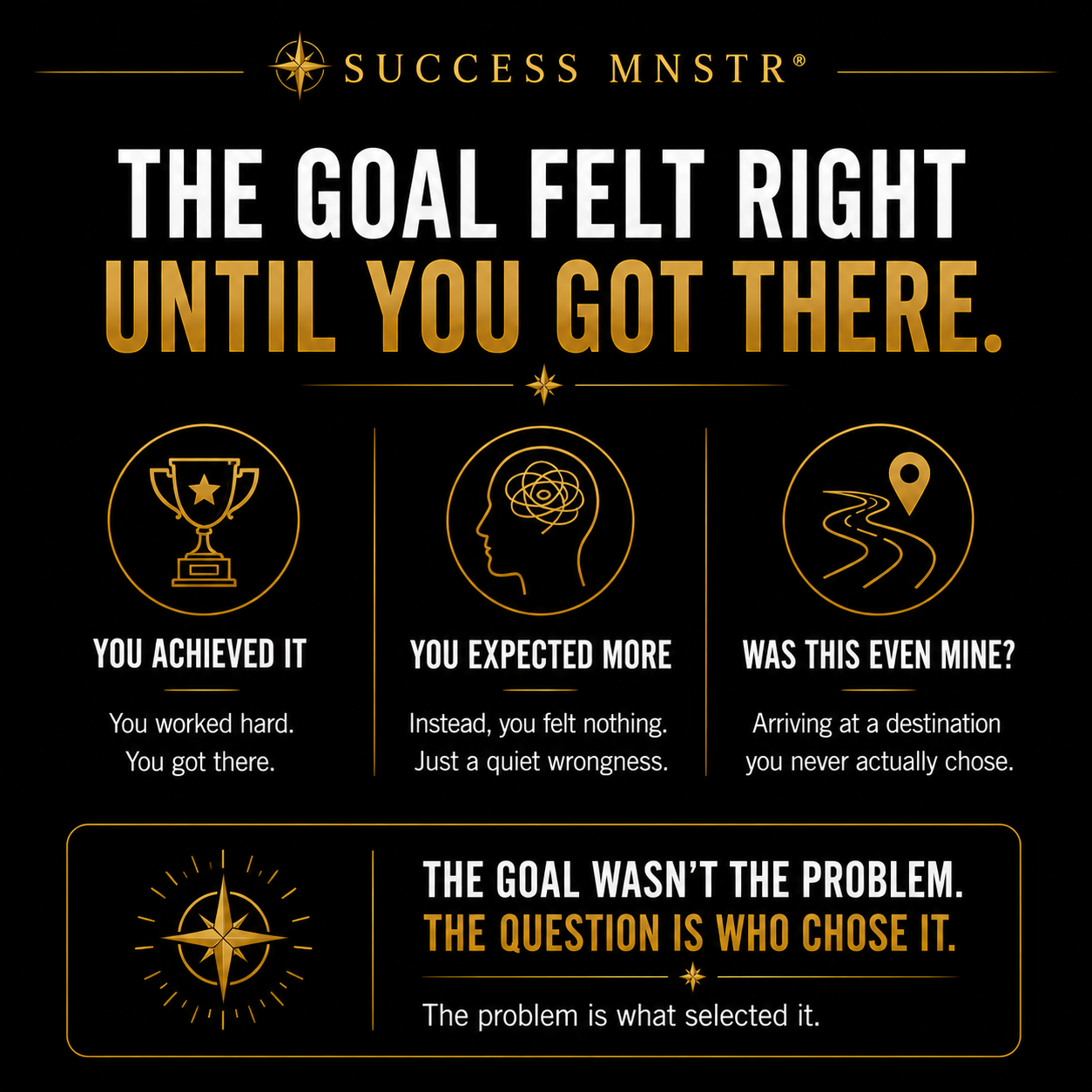
The goal felt right until you got there
There is a specific kind of confusion that comes from finishing something significant and feeling nothing. Not relief. Not pride. Not even disappointment exactly. Just a quiet wrongness, like arriving at a destination and realizing you never actually chose it.
This is one of the most commonly asked questions across every psychology and self-help platform: why do I achieve my goals and still feel empty? Why am I not satisfied even after achieving my goal? Why do I feel like there's something missing after I worked so hard to get here?
Every answer says the same thing. Your goals were not aligned with your values. Find your true calling. Practice gratitude for what you have built. The problem with that answer is that it assumes the goal was the wrong one. Most of the time the goal was fine. The problem is what selected it.
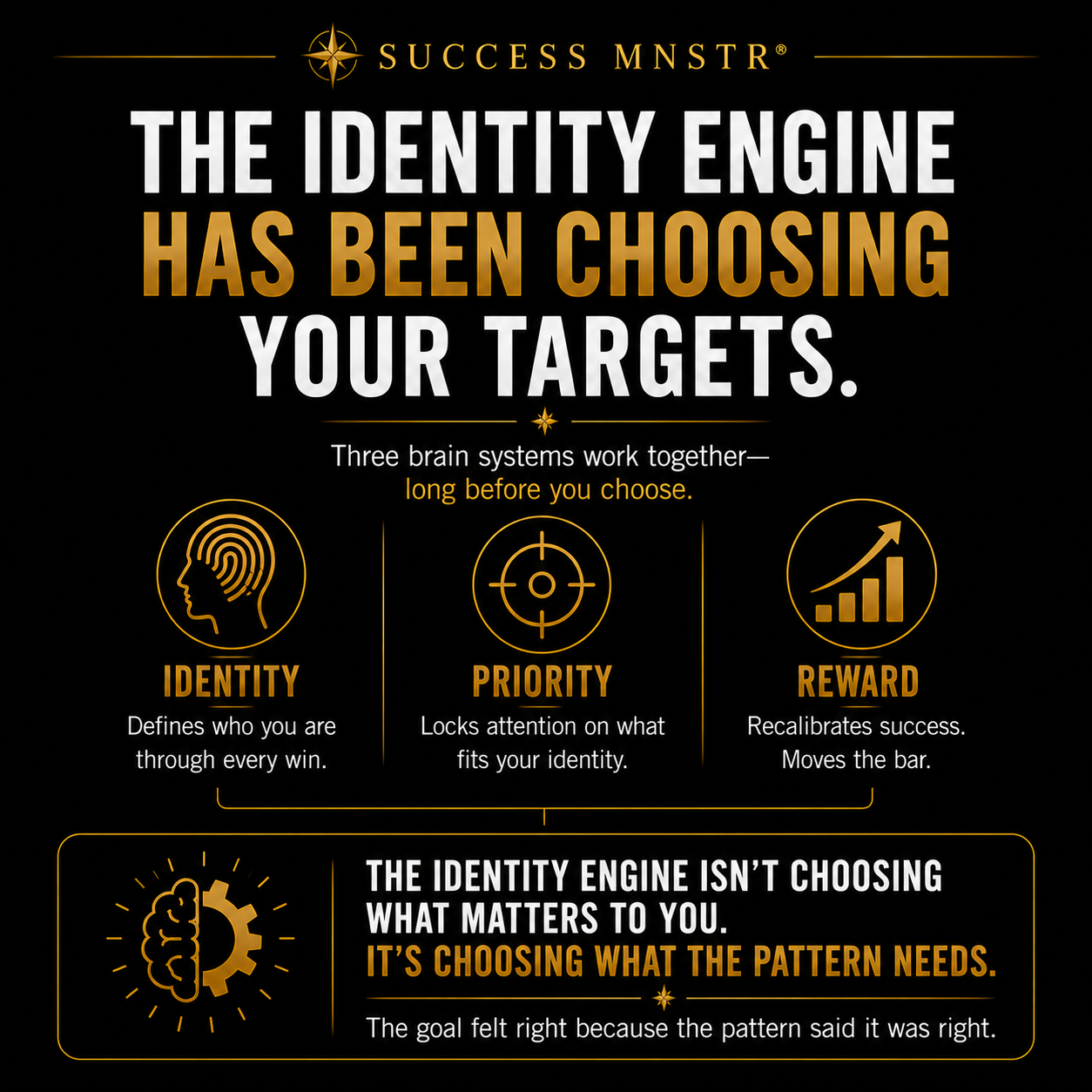
The Identity Engine has been choosing your targets
Your brain does not wait for you to consciously decide what to pursue. Long before you sit down and set a goal, a network of brain systems has already been narrowing the field based on one thing: what has historically been rewarded, validated, or used to resolve the feeling of not being enough.
The Identity System (Default Mode Network and Medial Prefrontal Cortex) connects achievement to self-concept. Every win you have ever had has been filed by this system as evidence of who you are. Every milestone you have crossed has updated the operating definition of what you need to do next to remain that person. The Priority System (Salience Network, Anterior Insula and Anterior Cingulate Cortex) then locks your attention onto the goal that fits that definition and filters out everything else. The Reward Evaluation System (Orbitofrontal Cortex) keeps recalibrating what success should feel like, which is why the bar moves the moment you reach it.
Together these 3 systems form the Identity Engine. And the Identity Engine is not selecting goals based on what would genuinely matter to you. It is selecting goals based on what the pattern has learned to need.
The goal felt right because the pattern said it was right. And the pattern is a very convincing voice.
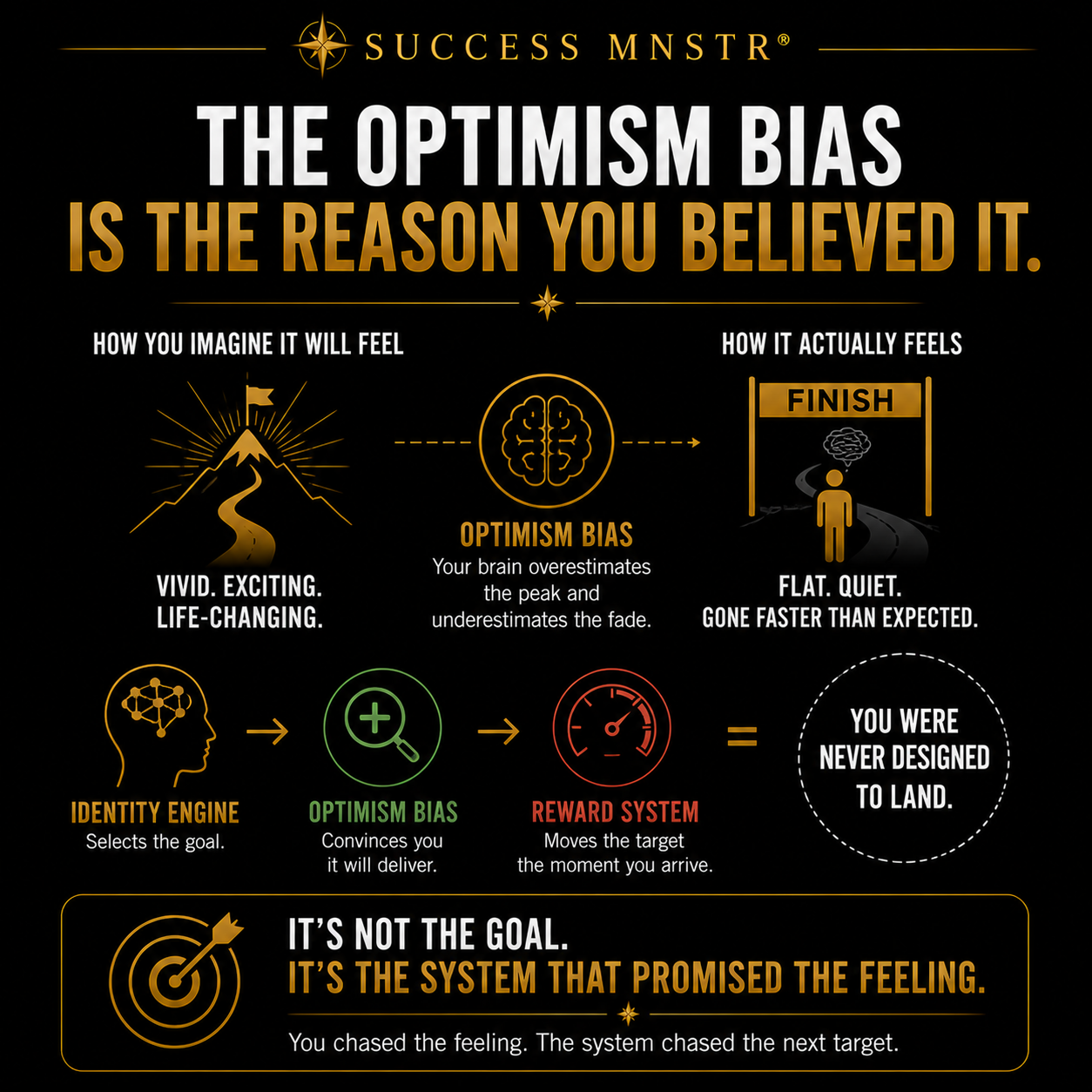
The optimism bias is the reason you believed it
The fact that you worked hard and struggled a lot to achieve your goal and finally after completing it feel empty is not a sign of ingratitude. It is a predictable neurological outcome that has a name: optimism bias.
The brain is remarkably bad at predicting how it will actually feel after a future event. Research from Harvard psychologist Daniel Gilbert confirms that people consistently overestimate how good they will feel when they reach a goal and underestimate how quickly the feeling will fade. The brain generates an anticipatory emotional simulation of the finish line that is almost always more vivid and more satisfying than the real thing.
This is why the goal felt so right during the chase. The Identity Engine selected it. The optimism bias convinced you it would deliver the feeling you were looking for. And the Reward Evaluation System ensured that the moment you arrived, it was already recalibrating toward the next target.
You were never going to feel what you expected. Not because the goal was wrong. Because the system that selected it was never designed to let you land.
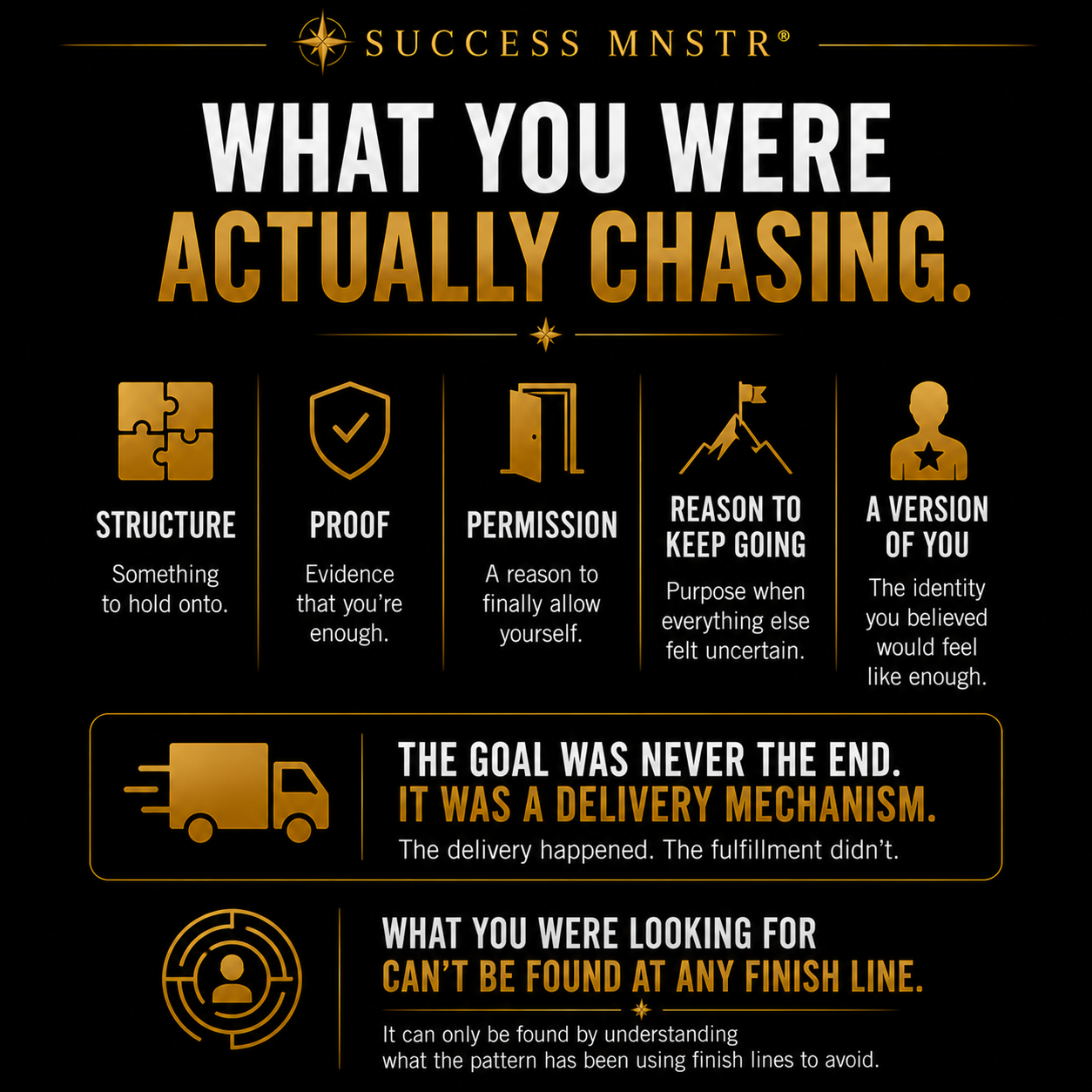
What you were actually chasing
When someone asks why don't I want what I thought I wanted, the honest answer is that they never wanted the goal itself. They wanted what the goal represented. Structure. Proof. Permission. A reason to keep going. A version of themselves that finally felt like enough.
The goal was always a delivery mechanism for something deeper. And the reason it felt hollow when you reached it is that the delivery happened but whatever it was supposed to deliver never arrived. Because the thing you were actually looking for cannot be found at any finish line. It can only be found by understanding what the pattern has been using finish lines to avoid.
I have spent years watching this. The people who keep chasing and keep feeling empty are not choosing the wrong goals. They are running a pattern that keeps selecting goals based on what it needs to sustain itself, not what the person underneath the pattern actually needs.
What you felt at the finish line was not failure. It was the first honest signal the pattern had ever given you. The discomfort of arriving somewhere that did not feel right is the beginning of understanding which pattern has been doing the choosing.
What changes when you see it
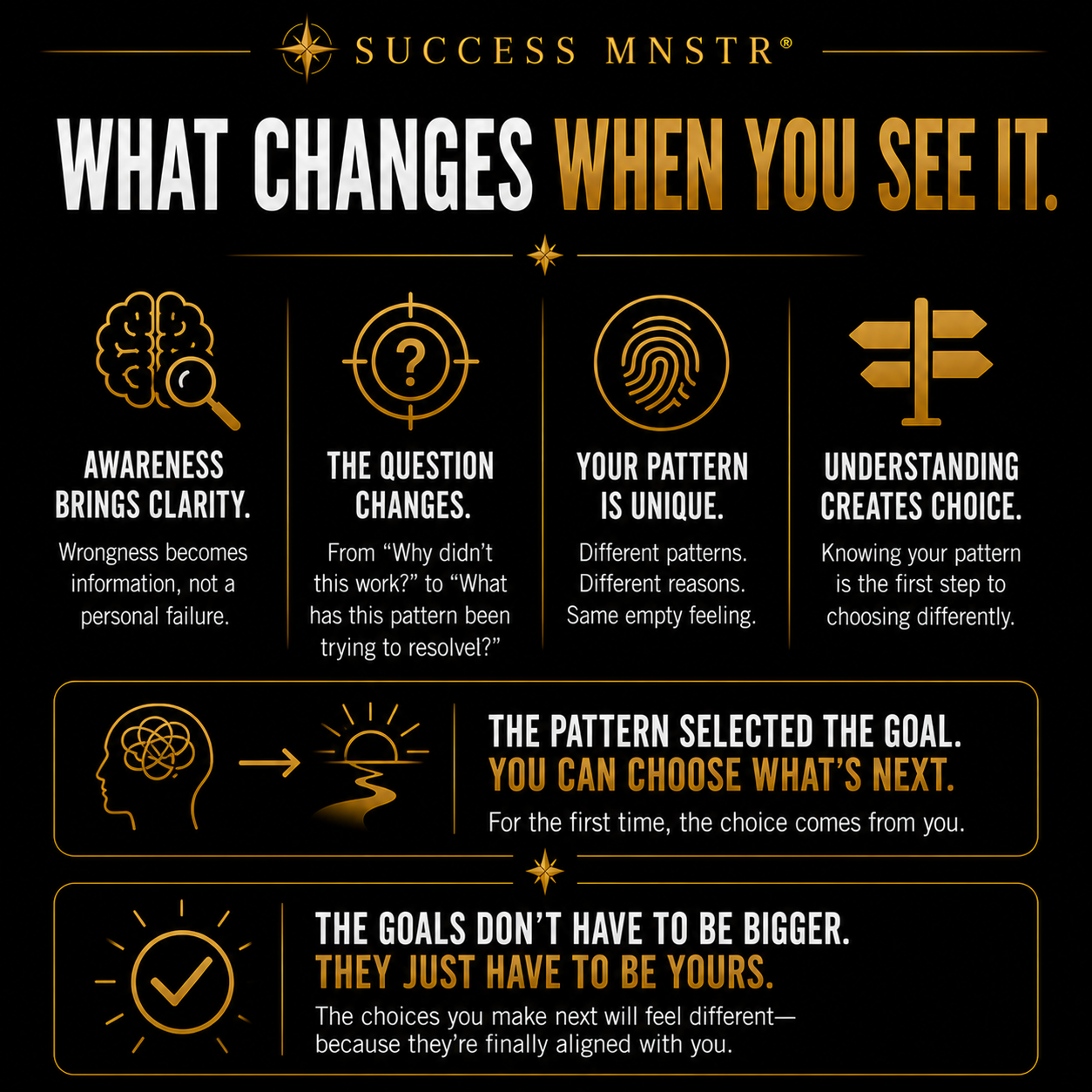
When people understand that the goal was selected by a pattern rather than consciously chosen, something shifts. The feeling of wrongness at the finish line stops being evidence that something is broken and starts being information about what has been running underneath.
The question stops being why did this goal not work and starts being what has this pattern been trying to resolve through every goal I have ever chased. That is a completely different question. And it leads somewhere completely different.
Every person's pattern runs differently. The way the Identity Engine selects goals for someone whose pattern was built around proving worth looks completely different from someone whose pattern was built around earning safety, or belonging, or control. Which is why the same finish line can feel empty for completely different reasons in completely different people.
Understanding which pattern is yours is not a philosophical exercise. It is the practical first step to choosing something that actually belongs to you.
As you begin to understand which pattern has been selecting your targets, you will find the choices you make next feel different from any you have made before. Not because the goals are bigger or better. Because for the first time, they are actually yours.
Meet your Success MNSTR at SuccessMNSTRquiz.com